Your natal chart —the full portrait of who you really are
Build your personal birth chart in 2 minutes: date, time and place of birth — and the AI astrologer reads your planets, houses and aspects. Free.
Felt more accurate than my last reading with an astrologer.
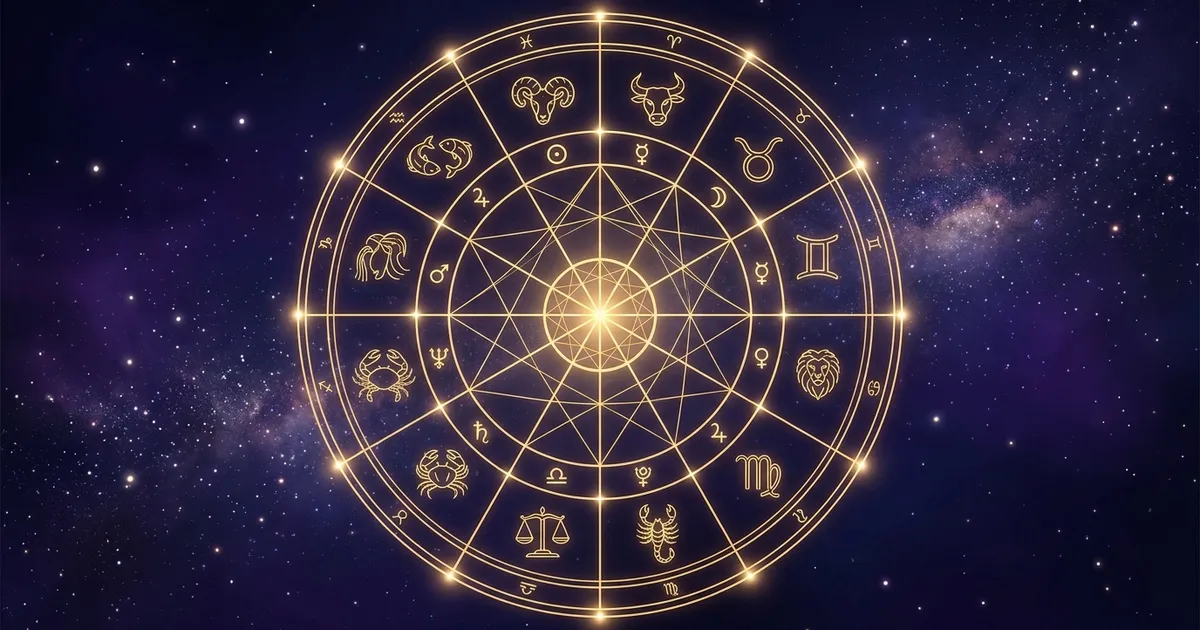
Free birth chart calculator
Sun, Moon, Rising and planets — from your date, time and place of birth.
—You read horoscopes — but they speak to 'all Leos,' never to you?
—You want to understand why you are the way you are — but have no idea where to begin?
—You've taken personality tests — but the results never quite fit?
10 planets, 12 houses, 25+ aspects
Every element of your chart reveals another facet of who you are
The Sun — your core
Your Sun sign defines your core identity, your sense of purpose and how you naturally express yourself.
The Moon — your emotions
Your Moon reveals your deeper needs, your emotional patterns and what makes you feel safe.
The Ascendant — your first impression
Your rising sign shapes how others first see you and the energy you lead with. Needs your exact birth time.
10 planets
From Mercury to Pluto — each one governs an area of your life, from how you communicate to how you transform.
12 houses
The houses are the life arenas where your planetary energies play out — from identity and money to relationships and the subconscious.
25+ aspects
The angles between your planets show how the different sides of your personality talk to (and challenge) one another.
The three pillars every chart is built on
Before the details, these three placements sketch the outline of who you are.
Sun
Your core identity and the thread that runs through everything you do. It's the version of you that stays constant even when the mood and the moment shift.
Moon
Your inner world: how you feel, how you comfort yourself, and how you process what happens beneath the surface. The private you that most people rarely get to see.
Rising
The face you lead with and the first impression you leave in a room. It shapes how you approach the world and how the world tends to meet you in return.
Tell us about yourself — we'll show you how you're wired
Enter your birth data
Date, exact time and place of birth — that's everything we need to calculate your one-of-a-kind chart
We build your chart
Professional-grade calculations (Swiss Ephemeris, 0.001°) place every planet, and the AI reads it — not a template, but an interpretation that's uniquely yours
Get your reading
Your Big Three, your full chart, your strengths, patterns and growth points — all in one place
Astrollo AI vs. ordinary horoscopes
| Astrollo AI | Regular services | |
|---|---|---|
| Calculation accuracy | Swiss Ephemeris, 0.001° | Simplified tables |
| Depth | 10 planets, 12 houses, 25+ aspects | Sun sign only |
| Personalization | Date + time + place of birth | Birth date only |
| AI reading | A personal interpretation of your own chart | Template text for everyone |
| Interactivity | Ask the AI anything about your chart | Static result |
Free Natal Chart Online with AI Interpretation
Your natal chart is a snapshot of the sky at the exact moment you were born, and Astrollo builds yours online, for free, complete with a plain-language interpretation you can actually use. Enter your birth date, time, and place, and within seconds you'll see where every planet sat across the twelve zodiac signs and houses, plus what those placements suggest about how you think, love, and move through life. Because timing matters right down to the minute, we calculate positions with Swiss Ephemeris precision, so the wheel you receive is astronomically accurate rather than a rough approximation.
A complete reading is far more than your Sun sign. The real depth comes from your "Big Three": your Sun (core identity), your Moon (emotional world), and your rising sign, the face you show the world and the way you first meet it. From there, each of the planets adds another layer, Mercury shaping how you communicate, Venus coloring what you value, Mars driving how you take action. If any term feels unfamiliar, our guide to the 12 zodiac signs explains each archetype in everyday language.
Placement is only half the story; the other half is location. The astrological houses reveal which areas of life, career, relationships, home, creativity, each planet lights up. A Venus in your tenth house reads very differently from a Venus in your fourth, and Astrollo spells out that difference so you're never left guessing. For the full picture of how a birth chart is assembled and interpreted, our natal chart guide walks through every component step by step.
Astrology here is a tool for self-reflection and planning, not fortune-telling, so treat your chart as a mirror rather than a verdict. Once you know your own placements, you can explore how two charts interact with the compatibility tool, or follow how today's sky touches your birth chart through your personalized horoscope. Ready to see yours? Create your free natal chart and get an interpretation written just for you.
FAQ
What else your chart can reveal
Your natal chart is only the beginning
Keep exploring
Natal Chart: What It Is and How to Read It
A clear guide to the natal chart: what your birth chart shows, the planets, signs, houses and aspects, and how to read it step by step for self-reflection.
Rising Sign (Ascendant): The Complete Guide
What your rising sign (Ascendant) means, how it's calculated from your exact birth time, and how it shapes your entire natal chart. A complete guide.
Planets in Astrology: All 10 and Their Meaning
A complete guide to the planets in astrology — personal, social, and transpersonal. Learn what each planetary ruler means and how to read it in a chart.
Astrological Houses: The 12 Life Areas of Your Chart
A clear guide to the 12 astrological houses: what each house governs, the four angles (ASC, IC, DSC, MC), Placidus vs. whole-sign systems, and how to read planets in houses.
The 12 Zodiac Signs: Meanings, Elements & Modalities
A clear, native guide to all 12 zodiac signs: their dates, meanings, ruling planets, elements, and modalities, and what your sun sign really reveals.
Choose your zodiac sign
See what your natal chart reveals about your sign: character, strengths and growth areas.
Aries
March 21 – April 19
Taurus
April 20 – May 20
Gemini
May 21 – June 20
Cancer
June 21 – July 22
Leo
July 23 – August 22
Virgo
August 23 – September 22
Libra
September 23 – October 22
Scorpio
October 23 – November 21
Sagittarius
November 22 – December 21
Capricorn
December 22 – January 19
Aquarius
January 20 – February 18
Pisces
February 19 – March 20
What a Real Birth Chart Reading Actually Measures (And What It Doesn't)
The horoscope you grew up with is barely a footnote
Here's the uncomfortable truth about those newspaper horoscopes: they're built on a single data point. Your Sun sign is just where the Sun sat in the zodiac on your birthday — one of twelve slices of sky, shared by everyone born inside the same three-and-a-half-week window. Sorting eight billion people into twelve bins was never going to say much about any one of them.
A real birth chart does something categorically different. It's a precise snapshot of the entire sky — every major body, its exact angle, the horizon line — frozen at the specific moment and place you were born. Not your birthday. The minute. Not your country. The coordinates. Shift the time by twenty minutes or the location by a few hundred miles and the picture changes. That specificity is the whole point, and it's exactly what a Sun-sign horoscope throws away.
So before we go any further: if your entire relationship with astrology is knowing you're "a Scorpio," you've been reading the cover of a book and calling it the plot.
The chart is a map, not a slogan
A natal chart has three moving parts most people never hear about. First, ten celestial bodies — the Sun, the Moon, and the eight planets (astrologers count the Sun and Moon as "planets" by tradition, even though astronomically they're a star and a satellite). Second, twelve houses, which are the life domains: money, relationships, career, home. And third, the aspects — the geometric angles the planets form to one another, which describe how those energies cooperate or grind against each other.
The famous starting point is the Big Three:
- The Sun — your core identity, your vitality, the thing you're consciously becoming.
- The Moon — your inner emotional world, your instincts, what makes you feel safe.
- The Rising sign (Ascendant) — the face at the door: how you meet the world, and how it first meets you.
That third one, the rising sign, is why two people born on the same day can feel like different species. It's calculated from the exact horizon at your birth — which brings us to the part everyone gets wrong.
Precision is load-bearing — especially your birth time
This is where astrology quietly becomes a computational discipline. Modern chart software runs on the Swiss Ephemeris, an astronomical dataset accurate to roughly 0.001° of arc. The positions aren't in question — this is settled sky-geometry that Kepler and his successors worked out centuries ago.
The soft spot is your input. Specifically, your birth time.
The Ascendant moves about one degree every four minutes. Get your birth time wrong by half an hour and your entire chart can rotate onto the wrong houses — the "map of your life domains" quietly reshuffles.
The Moon is nearly as sensitive: it changes zodiac sign roughly every two and a half days, so even a wrong date — or a guessed time near a sign boundary — can hand you the wrong emotional signature. A chart is only as good as its timestamp. "Around noon" isn't a birth time; it's a shrug. Dig out the birth certificate.
How to actually read a chart — in layers
You don't read a chart the way you read a paragraph, left to right. You read it in passes, zooming in each time:
- Big Three first. Sun, Moon, Rising. This is the headline — identity, feeling, presentation.
- Planets in signs. What each planet is doing, colored by the sign it's in (Mars in Libra "wants" differently than Mars in Aries).
- Planets in houses. Where it plays out — which life domain gets that energy.
- Aspects. How the parts talk to each other — the tensions and the easy alliances.
Only in that last layer does the chart stop being a list and start being a person. The elements and modalities — fire, earth, air, water; cardinal, fixed, mutable — sit underneath all of it, setting the overall temperature. Is this someone weighted toward action, ideas, feeling, or steady building?
A quick worked example
Picture an anonymous chart: Sun in Capricorn, Moon in Pisces, Mercury conjunct the Sun.
Read alone, "Capricorn Sun" says ambitious and disciplined — the standard-issue keyword. But the Pisces Moon complicates it: underneath the drive is someone porous, easily moved, quietly sentimental. The public builder and the private dreamer are the same person. Now add Mercury conjunct the Sun — thought fused tightly to identity — and you get someone whose sense of self is bound up in how they think and talk. Criticize the idea and it lands as criticizing them.
None of those three placements says any of that on its own. The reading lives in the combination — which is why software can compute a chart in a heartbeat, but interpreting one is a craft.
What's free here, and what isn't — stated plainly
The calculator on this page draws your full chart for free: all ten bodies, twelve houses, the aspects, the Big Three, computed on the Swiss Ephemeris. No paywall on the math. You get the actual map.
What sits behind a paid plan is the narrative — a full, AI-written interpretation that reads those placements together the way our example above did, in fluent depth rather than keyword fragments. We'd rather tell you that before you sign up than after. Free chart, honest data; a paid reading only if you want the story woven for you.
The honest limits
A chart describes tendencies, not verdicts. It's a language for self-reflection — not a diagnosis, and not a prescription.
To be explicit: nothing here is medical, therapeutic, legal, or financial advice. A placement that suggests "emotional sensitivity" is not a mental-health assessment. A transit is not a reason to quit your job, leave a relationship, or move your money around. Those are decisions for you — and where they're serious, for the relevant qualified professional.
What the evidence actually says
Here's the part most astrology sites won't put in writing: under controlled scientific conditions, astrology has shown no confirmed predictive power. Rigorous studies — including tests where seasoned astrologers tried to match charts to real people's profiles — have consistently landed at chance. As a forecasting instrument, it doesn't beat a coin flip.
That's not the end of the story, though. Astrology's real value was never prophecy. It's a mirror — a structured, centuries-old vocabulary for thinking about who you are, how you relate, and what you tend to repeat. The same holds for adjacent systems like numerology, with its own vocabulary of life-path numbers and the master numbers 11, 22, and 33. Used honestly, a birth chart is a prompt for self-examination, not a crystal ball. It asks better questions than it answers — and that, handled with a clear head, is genuinely useful.
So read your chart. Take the rising sign, the houses, and the aspects seriously as a frame. Just don't outsource your life to the sky — a chart is a mirror, not a judge. Run your free chart and treat what comes back as a conversation with yourself, not a script someone else already wrote for you.