What Are Astrological Houses? (12 Areas of Life)
Astrological houses are the twelve life domains of a natal chart, covering areas such as self, money, communication, home, creativity, work and partnership. Set by your exact birth time and place through the Ascendant, the houses show where planetary energies play out, while signs show how and planets show what. They are a mirror for self-reflection, not prediction.
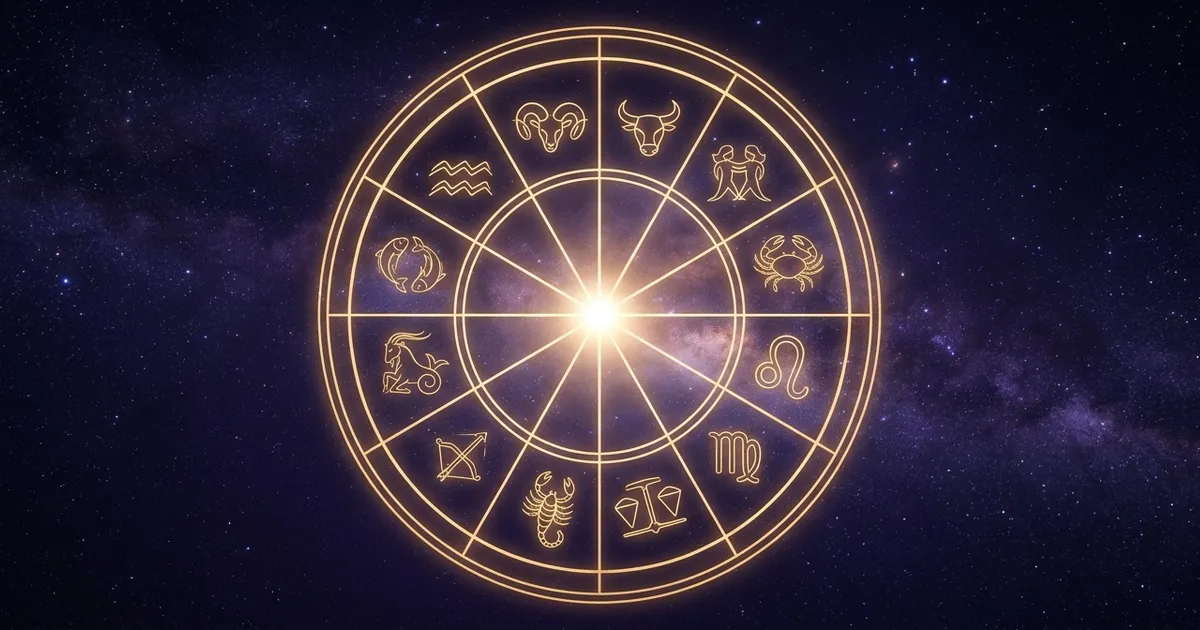
To understand the astrological houses, picture your birth chart as a wheel divided into twelve slices. As Wikipedia's overview of houses notes, most horoscopic traditions "divide the horoscope into a number (usually twelve) of houses whose positions depend on time and location rather than on date." The planets and signs describe parts of your psyche and their style, but the houses anchor them to real-life arenas. A planet in the second house touches money and self-worth; the same planet in the seventh touches relationships. Because the houses are fixed by the rotation of the Earth at your birth, they depend entirely on an accurate birth time, which is why they are the most time-sensitive layer of any chart. If you already know yours, our free natal chart calculator plots all twelve houses from your exact date, time and place in seconds.
The 12 Houses at a Glance: What Each One Governs
Each of the twelve houses in astrology corresponds to a recognisable area of life, and each has a "natural" sign and ruling planet that flavours its meaning. The table below gives a working summary you can return to as you read your own chart.
| House | Core life area | Natural sign / ruler | Keyword theme |
|---|---|---|---|
| 1st | Self, identity, body, first impressions | Aries / Mars | "How you show up" |
| 2nd | Money, possessions, self-worth | Taurus / Venus | "What you value" |
| 3rd | Communication, siblings, local life | Gemini / Mercury | "How you connect" |
| 4th | Home, roots, family, foundations | Cancer / Moon | "Where you belong" |
| 5th | Creativity, romance, play, children | Leo / Sun | "How you create" |
| 6th | Work, routines, health habits, service | Virgo / Mercury | "How you function" |
| 7th | Partnerships, marriage, close others | Libra / Venus | "Who you partner" |
| 8th | Shared resources, intimacy, deep change | Scorpio / Pluto | "How you transform" |
| 9th | Travel, beliefs, higher learning | Sagittarius / Jupiter | "What you seek" |
| 10th | Career, reputation, public role | Capricorn / Saturn | "How you achieve" |
| 11th | Friends, community, hopes, networks | Aquarius / Uranus | "Who you join" |
| 12th | Solitude, the unconscious, rest, retreat | Pisces / Neptune | "What you release" |
These themes are starting points, not fixed rules. The richest reading comes from combining a house's life area with the sign on its cusp and any planets inside it.
The Four Angles: ASC, IC, DSC, and MC
The chart is built around two crossing axes that create four powerful points called angles. They mark the beginnings of the most important houses and act as the structural skeleton of the whole chart.
- Ascendant (ASC) — the eastern horizon, start of the 1st house. It governs identity, appearance and how you meet the world. It also sets where every house begins.
- Imum Coeli (IC) — the lowest point, start of the 4th house. It speaks to home, roots, family and your private inner foundation.
- Descendant (DSC) — the western horizon, start of the 7th house. It describes partnership, close others and what you seek in relationship.
- Midheaven (MC) — the highest point, start of the 10th house. It points to career, reputation and your public role.
Together the Ascendant and Midheaven form the chart's spine. Planets sitting close to any angle tend to feel especially loud in your life, because angular placements are amplified by their position on these defining axes.
House Categories: Angular, Succedent, and Cadent
Astrologers group the twelve houses into three categories of four, each with a different quality of energy. Recognising the category of a placement helps you gauge how prominent or background it feels.
| Category | Houses | Quality | Feel |
|---|---|---|---|
| Angular | 1, 4, 7, 10 | Initiating, active | Strong, visible, prominent |
| Succedent | 2, 5, 8, 11 | Stabilising, sustaining | Steady, resource-building |
| Cadent | 3, 6, 9, 12 | Adapting, distributing | Flexible, mental, transitional |
Angular houses carry the most weight; a planet here often defines a chart. Succedent houses consolidate and stabilise what the angular houses begin, governing values, pleasure, shared resources and community. Cadent houses are about learning, adjusting and connecting ideas, and they tend to operate more quietly behind the scenes. This rhythm of start, sustain and adapt mirrors the cardinal, fixed and mutable modalities of the zodiac signs, which is one reason the system feels so internally consistent once it clicks.
Reading Planets in Houses: A Practical Framework
A planet in a house tells you where that planet's energy is most likely to express itself. The reliable way to read it is to build a short sentence from three ingredients.
- Name the planet (the "what"). For example, Mars is drive, action and assertion.
- Add the house (the "where"). The tenth house is career and public role.
- Layer in the sign (the "how"). Mars in Capricorn acts with discipline and ambition.
Read together, "Mars in the tenth house" suggests someone who pursues professional goals with energy and competitive drive. Try the same method with your own placements:
- Venus in the 5th — affection expressed through creativity and romance.
- Saturn in the 4th — a serious, responsible relationship to home and family.
- Mercury in the 9th — a mind drawn to travel, philosophy and big questions.
Always treat these as prompts for reflection, not verdicts. A chart describes tendencies and themes you may recognise; it never dictates outcomes, and it is not medical, financial, legal or psychological advice.
House Systems Compared: Placidus vs. Whole-Sign
A house system is the method used to divide the chart into twelve houses. Two are most common, and they can place the same planet in different houses, so it helps to know how they differ.
| Feature | Placidus | Whole-sign |
|---|---|---|
| Accuracy style | Time-based, unequal houses | Sign-based, equal houses |
| Latitude handling | Distorts at high latitudes (over 66°) | Stable everywhere |
| House cusps | Planets can shift between houses | One full sign per house |
| Beginner-friendly | Moderate | Very easy to learn |
The Placidus house system is the modern Western default and the system Astrollo uses by default, computed with Swiss Ephemeris precision. It is named after Placidus de Titis (1603–1668), the Olivetan monk and professor of mathematics and astronomy at the University of Pavia who popularised it, though the underlying method is far older. Whole sign houses are an older, simpler approach where the sign on your Ascendant becomes the entire first house, the next sign the second, and so on. It is, according to Wikipedia, "the oldest system of house division," used in the Hellenistic tradition around the 1st or 2nd century BCE. Neither is "correct"; they are different lenses. Many learners start with whole-sign for clarity, then explore Placidus for its nuanced, time-sensitive cusps.
There is a concrete astronomical reason to prefer whole-sign at the extremes. As the same reference explains, "the Placidus system is sometimes not defined beyond polar circles (latitudes greater than 66°N or 66°S), because certain degrees are circumpolar (never touch the horizon)." For births in far-northern cities such as Reykjavik or Tromsø, Placidus can distort houses badly, so whole-sign or equal houses are often preferred. The way this start–sustain–adapt rhythm echoes the elements and modalities of the signs is one reason the whole framework feels so coherent.
Empty Houses and House Rulers: Reading What Isn't Obvious
With only ten planets spread across twelve houses, most charts have several empty houses, and that is perfectly normal. An empty house is not a void or a weakness; that life area simply runs without a "tenant" planet to spotlight it.
To read an empty house, use two tools:
- The sign on the cusp. The sign beginning that house colours how the area expresses. An empty seventh house with Libra on the cusp still describes a harmonious, partnership-oriented style.
- The house ruler. Find the planet that rules the cusp sign, then see which house that ruler sits in. This "ruler" links the empty house to an active part of the chart. If your second-house ruler lives in the tenth, your finances may connect strongly to your career.
This technique keeps every house meaningful, even without a planet inside, and it is one of the clearest signs that you have moved beyond beginner chart-reading.
How to Map the Houses in Your Own Chart
Putting the houses to work in your own natal chart is straightforward once you have accurate birth data.
- Gather your birth details. You need your date, exact time and place of birth, since the houses and Ascendant depend on all three.
- Generate your chart. A calculator maps the planets, signs and houses instantly. The Ascendant sets where the wheel begins.
- Find your angles first. Locate the ASC, IC, DSC and MC to orient yourself, then read counterclockwise through the houses, starting from the 1st at the Ascendant.
- Note the occupied houses. Where do your planets cluster? A stellium in one house highlights a major life theme.
- Check the empty houses. Read them through their cusp sign and ruler, as above.
Take it one house at a time rather than trying to absorb all twelve at once. The houses become intuitive surprisingly quickly when you anchor them to your own life.
Common Mistakes When Interpreting Houses
A few recurring errors trip up new readers. Avoiding them will sharpen your interpretations immediately.
- Treating empty houses as broken. They are normal; read them through cusp and ruler instead of ignoring them.
- Using a vague birth time. Houses shift within minutes, so an estimated time produces an unreliable house layout.
- Confusing houses with signs. Houses are the "where", signs are the "how". The fourth house is always home, even if Aries sits on its cusp.
- Reading placements in isolation. A chart is a conversation; look for repeated themes across houses rather than fixating on one dramatic placement.
- Mixing house systems mid-reading. Pick Placidus or whole-sign and stay consistent so your cusps line up.
- Expecting prediction. The houses describe symbolic life areas for reflection, never guaranteed events.
Keep these in mind and your readings will stay grounded, accurate and genuinely useful.
Ready to see your twelve houses in action? Calculate your free natal chart with Astrollo and watch the abstract houses become a personal map of your own life areas. Because the whole layout pivots on the eastern horizon, it is worth reading up on your rising sign too, since the Ascendant is what sets where your first house — and every house after it — begins.
Sources
- House (astrology) — Wikipedia — the twelve houses, whole-sign as the oldest system, and the polar-circle (66°) limitation of Placidus.
- Placidus de Titis — Wikipedia — biography (1603–1668) of the monk who popularised the Placidus house system.