What is a natal chart?
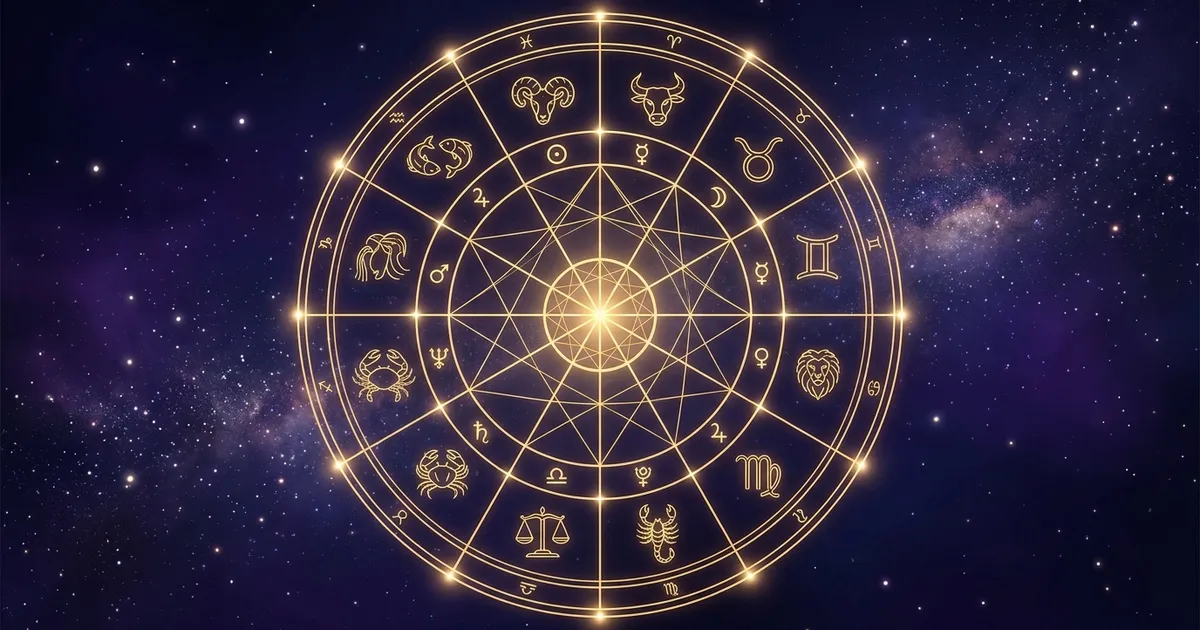
A natal chart is a map of the sky calculated for the exact moment and place you were born. It plots the Sun, Moon, planets and angles across twelve zodiac signs and twelve houses, offering a symbolic lens for self-reflection rather than a literal forecast of your life.
A natal chart (also called a birth chart) is, in other words, a snapshot of the heavens captured at your first breath. Astrologers read it as a mirror for reflection, not as a script for your future. Because the sky is always in motion, the arrangement at your birth is effectively unique to you. Two people born minutes apart in the same city can share much of a chart yet differ in the finer details that birth time controls. That makes the natal chart one of the most personal tools in astrology, and a thoughtful starting point for understanding the symbolism people have layered onto the planets for thousands of years.
The practice of casting a chart for a person's moment of birth is ancient. The most influential surviving text is the Tetrabiblos, written in Koine Greek by the Alexandrian scholar Claudius Ptolemy in the 2nd century CE; it "enjoyed almost the authority of a Bible among the astrological writers of a thousand years or more," according to Wikipedia's article on the Tetrabiblos. Understanding that long history helps set expectations: a birth chart is a symbolic tradition for reflection, not a modern predictive instrument. If you want to see your own chart while you read, you can calculate a free natal chart and follow along with a live example.
What does a natal chart actually show?
A natal chart shows three things working together: planets (the "what"), zodiac signs (the "how"), and houses (the "where"). The planets represent core drives and functions of the psyche. The signs colour the style in which each drive expresses itself. The houses point to the life areas where that energy tends to show up. Layered on top are aspects, the angles between planets that describe how these parts of you cooperate or clash.
In practical terms, a chart describes patterns and tendencies you may recognise in yourself, the way a well-written personality sketch might. It is best understood as a mirror for reflection and a prompt for self-awareness, never a fixed verdict. You always retain free will, context, and the influence of upbringing, culture and choice.
The planets: the "what"
Each planet governs a recognisable function (the Sun and Moon are included here as luminaries). Learning these meanings is the single most useful step in reading any chart, because the same handful of symbols repeats everywhere you look. A deeper study of the planets in astrology rewards the effort, but the table below gives a working summary.
| Planet | Core meaning | Keyword |
|---|---|---|
| Sun | Identity, vitality, conscious self | "I shine" |
| Moon | Emotions, instincts, inner needs | "I feel" |
| Mercury | Thinking, communication, learning | "I think" |
| Venus | Love, values, pleasure, beauty | "I value" |
| Mars | Drive, action, assertion, desire | "I act" |
| Jupiter | Growth, optimism, meaning, expansion | "I expand" |
| Saturn | Structure, discipline, limits, maturity | "I build" |
| Uranus | Change, innovation, individuality | "I awaken" |
| Neptune | Imagination, spirituality, dreams | "I dissolve" |
| Pluto | Transformation, depth, renewal | "I transform" |
The signs: the "how"
The twelve zodiac signs describe the flavour each planet wears. Astronomically, the zodiac is a belt around the ecliptic "divided along the ecliptic into 12 equal parts, called 'signs', each occupying 30° of celestial longitude," as Wikipedia's zodiac entry notes; Babylonian astronomers first made this twelve-fold division around the end of the fifth century BC. Western astrology reads these signs in the tropical system, in which "0 degrees of Aries as always coinciding with the March equinox," defined by the seasons rather than the observable constellations (Wikipedia, Sidereal and tropical astrology). A Mars in fiery Aries acts quickly and directly; a Mars in steady Taurus acts slowly but persistently. Signs are organised by two important systems: the four elements (fire, earth, air, water) and the three modalities (cardinal, fixed, mutable). Together these create twelve distinct temperaments, and recognising the underlying pattern helps you read any sign you have not yet memorised. For a deeper tour of each sign, see the guide to the zodiac signs.
| Modality / Element | Fire | Earth | Air | Water |
|---|---|---|---|---|
| Cardinal (initiating) | Aries | Capricorn | Libra | Cancer |
| Fixed (stabilising) | Leo | Taurus | Aquarius | Scorpio |
| Mutable (adapting) | Sagittarius | Virgo | Gemini | Pisces |
Fire signs tend toward energy and enthusiasm; earth signs toward practicality and patience; air signs toward ideas and communication; water signs toward feeling and intuition. Cardinal signs start things, fixed signs sustain them, and mutable signs adapt and refine. Each sign also has a traditional ruling planet that deepens its character, which is one of the next layers to explore once the basics feel comfortable.
The houses: the "where"
The chart is divided into twelve houses, like twelve slices of a pie, each tied to an area of life. A planet's house placement tells you where its energy is most likely to play out day to day.
| House | Life area |
|---|---|
| 1st | Self, identity, appearance |
| 2nd | Money, possessions, self-worth |
| 3rd | Communication, siblings, local environment |
| 4th | Home, roots, family, inner foundation |
| 5th | Creativity, romance, play, children |
| 6th | Work, routines, health habits, service |
| 7th | Partnerships, marriage, close others |
| 8th | Shared resources, intimacy, deep change |
| 9th | Travel, higher learning, beliefs, meaning |
| 10th | Career, reputation, public role |
| 11th | Friends, community, hopes, networks |
| 12th | Solitude, the unconscious, rest, retreat |
The exact house a planet falls into depends heavily on your birth time, which is why an accurate time matters so much for a full reading.
What is the rising sign and why does it matter?
The rising sign, or Ascendant, is the zodiac sign that was climbing over the eastern horizon at the moment of your birth. It sits at the start of the first house and effectively rotates the whole chart, setting where every house begins. Because it changes roughly every two hours, it is the most time-sensitive point in your chart, and one of the clearest reasons a precise birth time is so valuable.
Symbolically, the rising sign describes your outward style, your first impressions, and the lens through which you meet the world. Where the Sun is your core identity and the Moon your inner emotional life, the rising sign is the doorway others encounter first. Together these three points form what many astrologers call the "Big Three," a quick and grounded way to summarise a chart before you dive deeper into the planets, houses and aspects.
How do you read a natal chart step by step?
Reading a chart is a skill of synthesis: you gather small symbolic statements and weave them into a coherent picture. A reliable beginner sequence looks like this.
- Start with the Big Three. Identify your Sun, Moon and rising signs. These give the headline of your personality and a frame for everything else.
- Locate the personal planets. Note the sign and house of Mercury, Venus and Mars. They describe how you think, love and assert yourself in everyday life.
- Read each placement as a sentence. Combine planet plus sign plus house. For example, Venus (love) in Gemini (curious, talkative) in the seventh house (partnerships) might suggest someone who values communication in relationships.
- Look at the aspects. Note the major angles between planets. A conjunction (0°) blends two energies; a trine (120°) flows easily; a square (90°) creates productive tension; an opposition (180°) asks for balance.
- Step back and synthesise. Look for repeated themes. If several placements emphasise water signs or the relationship houses, that recurring pattern is more telling than any single detail.
Resist the urge to read each fragment in isolation. A chart is a conversation between its parts, and the most useful insight usually comes from the recurring motifs rather than one dramatic placement. If you want to explore how two charts interact, the related practice of synastry compares two people's placements to describe relationship dynamics, and it builds directly on the same planets, signs and houses you learn here. You can try it directly with the compatibility calculator once you have both birth details.
What is the difference between a natal chart and a daily horoscope?
A daily horoscope is generic: it speaks to everyone who shares your Sun sign, which is roughly one twelfth of the population. A natal chart is the opposite, a detailed and largely unique map built from your exact birth data. The horoscope is a broad weather report; the natal chart is your individual landscape. This is why two people with the same Sun sign can feel almost nothing alike: their Moons, rising signs, planets and houses tell very different stories.
How accurate is a natal chart?
It helps to separate two ideas. The calculation of a chart can be extremely precise. Astrollo computes planetary positions using the Swiss Ephemeris with an engine precision of 0.001°, so the astronomical placements themselves are accurate to a tiny fraction of a degree. That precision belongs purely to the mathematics of where the planets were, and nothing more.
The interpretation, by contrast, is symbolic. Astrology is a tool for self-reflection and entertainment, not a science of prediction. A chart may help you reflect on patterns, name feelings, or consider a fresh perspective, but it cannot diagnose or treat any health or mental-health condition, forecast your finances, or determine relationship, family or legal outcomes. Treat it as one lens to consider among many. It complements, and never replaces, professional medical, psychological, financial or legal advice. At Astrollo, interpretations are AI-assisted and reviewed by astrologers, and they are written to inform reflection rather than to make guarantees.
How can you apply your natal chart in everyday life?
Knowledge of your chart becomes useful when you turn it into gentle self-inquiry rather than fixed labels. Begin with your Big Three and ask honest questions: does my Sun sign reflect how I want to show up in the world? Does my Moon sign match how I actually process emotion? Where my rising sign and Sun differ, do I notice a gap between how others see me and how I feel inside?
From there, pick one placement at a time and sit with it for a week. If your chart highlights the sixth house of routines, you might try one new daily habit and notice what changes. If a square aspect describes inner tension, you might reflect on where that friction shows up and how you tend to resolve it. Used this way, a natal chart is less a fortune-teller and more a structured journaling prompt: a set of timeless symbols that can help you ask better questions about yourself.
The most rewarding way to learn is simply to read your own chart. Once you have it in front of you, the abstract symbols become personal, and the planets, signs and houses start to feel like familiar parts of your own story.
Sources
- Tetrabiblos — Wikipedia — Ptolemy's 2nd-century CE text and its authority across a millennium of astrological writing.
- Zodiac — Wikipedia — the ecliptic divided into twelve 30° signs, originating with Babylonian astronomers.
- Sidereal and tropical astrology — Wikipedia — the tropical system anchoring 0° Aries to the March equinox.